
EUREF-Talent-Campus Düsseldorf

With the opening of the new EUREF-Campus in North Rhine-Westphalia, learning and teaching in the real world laboratory of the energy transition will also be possible in Düsseldorf in future.

The climate protection targets will only be achieved if the next generation of skilled workers is available and the necessary training capacities are created. This is because the conversion of energy systems to renewable energies will result in new curricular challenges.

The development of new courses of study is a key element for the competitiveness of companies based in North Rhine-Westphalia. In cooperation with the University Alliance Ruhr and the Düsseldorf University of Applied Sciences and with the participation of the companies based on the campus, a range of study and further education courses is currently being developed that creates scope for interdisciplinary approaches in order to adequately reflect the increasing complexity of future energy systems in teaching and training, and which is primarily application-oriented. Four master’s programs are currently being developed here. The first two master’s programs, Management of Smart and Sustainable Energy Systems (MSc) and Sustainable Energy and Hydrogen Infrastructures (MSc), will start in the winter semester of 2025. The application phase has already begun.

Thanks to its location in the state capital and as a real laboratory for the energy transition, the EUREF-Campus Düsseldorf will build an ideal bridge to the Rhineland and Ruhr regions and develop into an exchange platform for business, science, politics and civil society.

OUTLOOK FOR MASTER’S PROGRAMS

As on the EUREF-Campus in Berlin, the EUREF-Campus Düsseldorf will also offer Master’s degree programs in the field of energy in the future. The thematic cornerstones of relevant curricula are currently being developed for the EUREF-Campus Düsseldorf in workshops with leading representatives from science, business, society and politics. The workshops form the framework for the content of the Master’s degree programs and for the participation of representatives from the relevant disciplines of the participating universities and colleges.

The focus is on interdisciplinary approaches in order to do justice to the social dimension of climate protection alongside the development of innovative technologies. Relevant topics in this context include, for example, the system integration of renewable energy sources, intelligent transportation and distribution networks, efficient energy applications – especially in the heating and mobility sectors – as well as energy market design. The hydrogen economy will be a particular focus.

With a cascading start from the winter semester 2025 to 2028, the following four courses are currently planned to be offered:

  • MSc Management of Smart and Sustainable Energy Systems 
  • MSc Sustainable Energy and Hydrogen Infrastructure
  • MSc Smart Design, Construction and Operation of Sustainable Buildings 
  • MSc Sustainable Logistic Solutions

Three semesters and 90 ECTS are planned for the English-language Master’s degree programs. The participating universities and colleges are aiming for a joint degree.

SCIENTIFIC MANAGEMENT

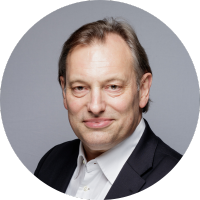
Professor Martin Faulstich is a senior professor at
the Technical University Dortmund. In this role,
he is the academic director for the new Master’s degree
programs to be set up on the EUREF-Campus Düsseldorf and research coordinator for the research and
development activities of the UA Ruhr.

PARTNER UNIVERSITIES

Four universities and colleges are involved in the development and implementation of the Master’s degree programs on the EUREF-Campus Düsseldorf: the University Alliance Ruhr with the Technical University Dortmund, the Ruhr University Bochum and the University Duisburg-Essen as well as the University of Applied Sciences Düsseldorf.

RESEARCH APPROACH

The Mobility2Grid research campus, which was set up on the EUREF-Campus, is continuously working on the transformation of mobility and the transport system, taking into account the energy system, together with local companies on the EUREF-Campus Berlin. With the establishment of the EUREF-Campus Düsseldorf, research is being expanded to include Düsseldorf as a transfer area.

mobility2grid LogoEUREF Campus Düsseldorf Logo

A first research project in Düsseldorf has already been sealed. In cooperation with TU Berlin, Wilo, Schneider Electric, inno2grid and EUREF-Consulting, a hydrogen production facility will also be built at the EUREF-Campus Düsseldorf and integrated into the innovative energy concept. The Mobility2Grid research campus will participate in hydrogen projects in both Berlin and Düsseldorf, thereby expanding the planned hydrogen research.

Partner

                inno2grid